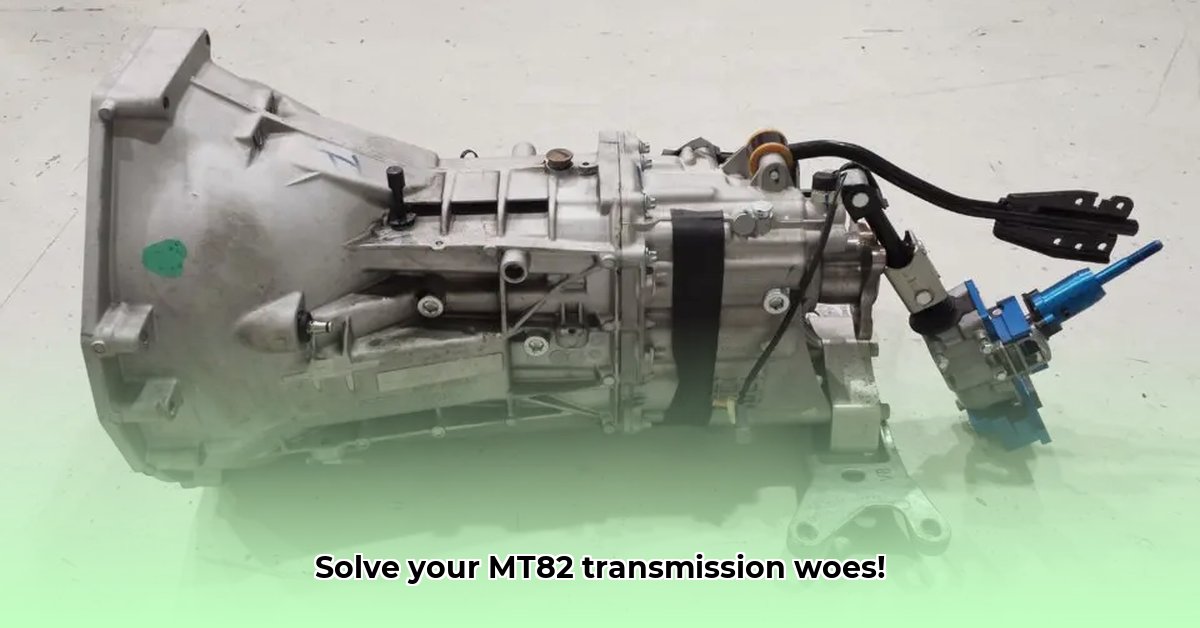
MT82: Conquering Your Mustang's Transmission Troubles
The Ford MT82 six-speed manual transmission, found in many Mustangs (2011-2020), has a reputation for issues. This guide details common problems, diagnosis, and fixes, ranging from simple adjustments to major upgrades. We'll also assess the risks involved in various repair approaches.
Understanding the MT82's Quirks
The MT82, while a modern design, has weaknesses. Its components, particularly the synchronizers (responsible for smooth gear changes), may struggle under the power of the Mustang's engine, especially during aggressive driving. This can cause grinding gears, difficult shifting, and general uncertainty, particularly at higher speeds. The shifter's indirect connection to the transmission adds to the problem; this delay is often felt as a lack of precision. The fuel-saving skip-shift system also sometimes contributes to issues. Is your Mustang exhibiting these symptoms?
Common MT82 Problems and Their Telltale Signs
These are some common MT82 complaints:
- Third Gear Hiccup at High RPMs: Difficulty engaging third gear at high RPMs often indicates worn synchronizers. Is this a familiar struggle?
- Grinding Gears: A metallic grinding sound during shifting is a serious problem; gears are rubbing, causing potential damage. Ignoring this could lead to catastrophic failure.
- Notchy Shifts: Stiff, imprecise, or clunky shifts suggest problems with the shifter linkage or internal wear. What's the feel of your shifts?
- Clutch Slippage: The engine revs, but the car doesn't accelerate proportionally. This points to a failing clutch, requiring immediate attention; do not drive the vehicle until it's repaired.
Diagnosing Your MT82: Is It a Minor Issue or Something More Serious?
Before complex repairs, perform these basic checks:
- Transmission Fluid Check: Check the fluid level. Is it low? Is it dark or milky (indicating contamination)? Low or dirty fluid is a common problem.
- Shifter Linkage Inspection: Examine the linkage connecting the shifter to the transmission for bends, breaks, looseness, or wear.
- Listen Carefully: Note any unusual noises during shifting; try to pinpoint the source for better diagnosis.
Fixing Your MT82: From Simple Fixes to Major Overhauls
The best approach depends on the severity and age of your Mustang. Minor issues might yield to simple fixes, while serious problems may warrant a major overhaul or replacement.
Short-Term Solutions (Minor Issues or Temporary Fixes)
- Fluid Change: Replacing the transmission fluid with high-quality synthetic fluid is inexpensive and may resolve minor issues. This is a cost-effective preventative measure.
- Clutch Upgrade: For clutch slippage, an upgraded clutch improves power handling and driving experience.
- Short-Throw Shifter: A short-throw shifter kit reduces shift travel, improving precision and responsiveness.
- Shifter Support Reinforcement: If the shifter feels wobbly, stiffer brackets improve shift feel.
Long-Term Solutions (Serious Problems or High-Performance Use)
For severe issues or demanding driving, a transmission replacement is often the best long-term solution. The Tremec Magnum XL is a popular, durable, high-performance alternative. While a significant investment, it greatly enhances performance and reliability.
Assessing the Risks: Likelihood and Severity of Component Failure
This risk matrix estimates the probability and severity of failure for common components:
| Component | Probability of Failure | Severity of Failure | Overall Risk | Mitigation |
|---|---|---|---|---|
| MT82 Transmission | High | High | Very High | Replacement with an aftermarket transmission (e.g., Tremec) |
| Stock Clutch | Medium | Medium | Medium | Upgrade to a high-capacity aftermarket clutch |
| Stock Shifter | Low | Low | Low | Upgrade to a short-throw shifter kit |
| Shifter Bushings/Brackets | Low | Low | Low | Replace with reinforced shifter bushings and brackets |
Regular maintenance (fluid changes, gentle driving) extends MT82 lifespan. However, for long-term reliability, a replacement is often the optimal solution.
How to Completely Replace a Failing Ford Mustang MT-82 Transmission
Replacing a Ford MT-82 transmission is challenging, best suited for experienced mechanics. Sourcing OEM parts is crucial due to limited aftermarket options, which increases costs. Specialized tools are essential; improvising can be costly. Meticulous disassembly, precise reassembly, and adherence to torque specifications are crucial. Thorough planning, including acquiring parts and tools beforehand, is vital.
Understanding the MT-82's Replacement Challenges
The MT-82's repair difficulty stems from limited aftermarket parts, necessitating expensive OEM components. Its intricate design requires specialized tools and expertise. One mistake can lead to significant problems.
Planning Your MT-82 Replacement: A Step-by-Step Guide
Efficient MT-82 replacement requires a well-defined plan:
- Gather Tools: Acquire necessary tools, including specialized pullers and a hydraulic press. Obtain a Ford repair manual.
- Source OEM Parts: Order OEM parts well in advance to avoid delays.
- Prepare Workspace: A clean, well-lit, spacious area is essential.
- Meticulous Disassembly: Document each step with photos or video; mark components for easy reassembly. Protect the output shaft speed sensor.
- Clean and Inspect: Thoroughly clean and inspect each component for wear.
- Precise Reassembly: Follow the repair manual carefully, paying close attention to alignment, torque specifications, and sealant/gasket application. Use Loctite where indicated.
- Test and Tune: Thoroughly test functionality after reassembly; a test drive is necessary after verifying proper reassembly. Check for leaks.
Pros and Cons of MT-82 Replacement
| Feature | Pros | Cons |
|---|---|---|
| Repair vs. Replacement | Lower cost (if DIY); maintains original transmission | Requires significant time, specialized tools, expertise; parts procurement can be difficult |
| OEM Parts | Optimal performance and longevity | High cost compared to aftermarket alternatives (if available) |
| Complexity | Demands thorough understanding of transmission design and function | Steep learning curve for novices; high risk of damage if improperly executed |
Minimizing Risks
Potential hazards include component damage during disassembly, incorrect reassembly, and parts sourcing difficulties. Precision and patience are key.